
DMC to Luca-S Thread Conversion Chart (and How to Substitute Colours)
· The Craft Paradise
EDITOR NOTE (remove before publishing): the conversion table below is a placeholder. Insert the official Luca-S to DMC cross-reference supplied by the brand or distributor. Do not publish an invented table.
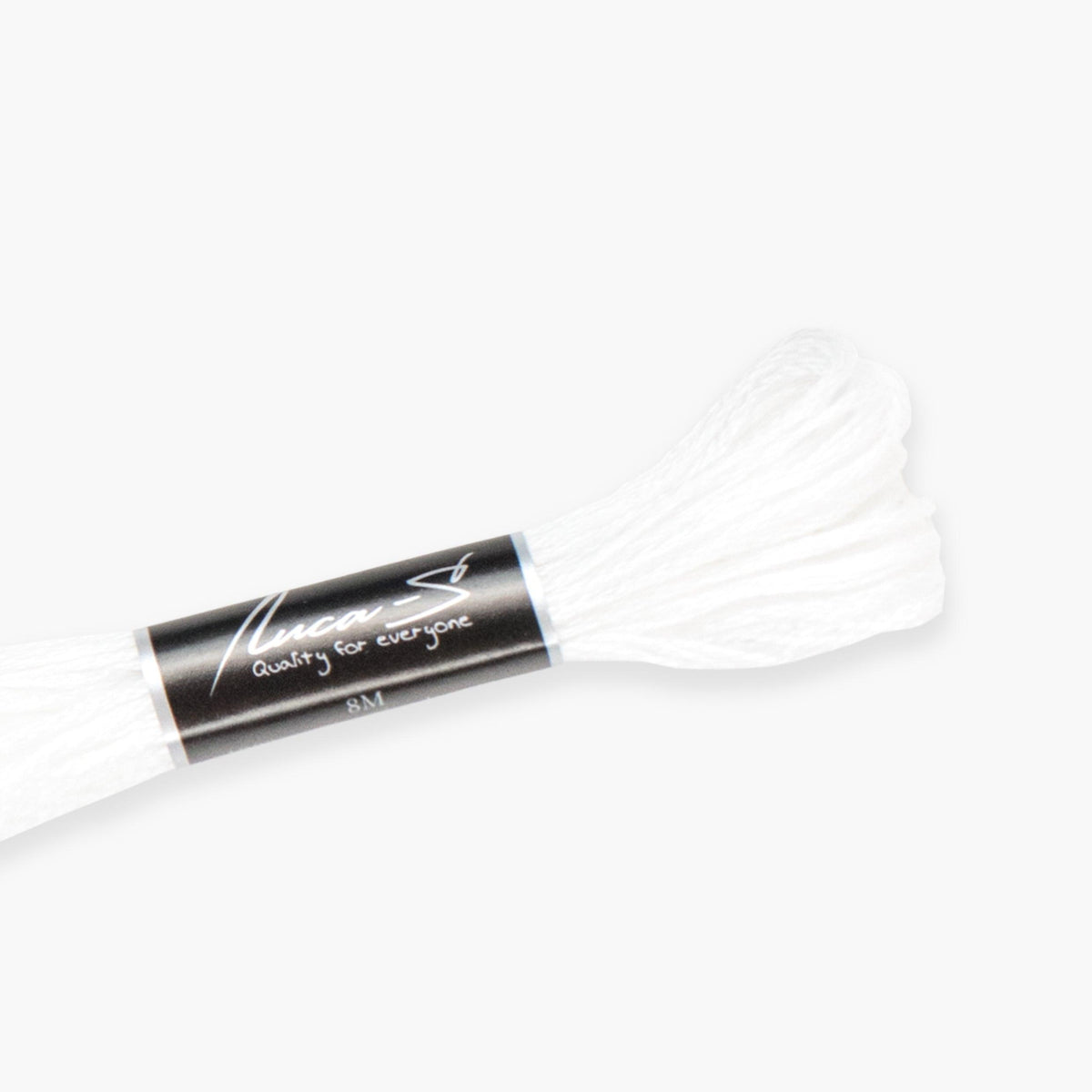
If you have ever found the perfect cross stitch pattern only to discover that the key lists DMC numbers while your thread drawer is full of Luca-S, this guide is for you. Thread conversion is one of the most common questions we get at The Craft Paradise, and the good news is that swapping brands is easier than most stitchers think. Below you will find how conversions work, why they are always a little approximate, how to check a match properly, and how to buy single Luca-S colours so you only pay for what your project actually needs.
Why thread conversions are approximate
Every thread manufacturer dyes its own cotton in its own dye lots, using its own recipes. Two brands can both call a colour "light antique blue", and both can be beautiful, yet they will never be chemically identical. A conversion chart is therefore a list of the closest equivalents, not a list of exact twins.
There are a few reasons a converted colour can look slightly different from the original:
- Dye recipes differ. Each brand mixes its own pigments, so undertones vary. One brand's warm grey may lean slightly brown, another's slightly green.
- Sheen and twist differ. The way the cotton is mercerised and twisted changes how it catches light. A shinier thread reads a touch lighter on the fabric than a matt one in the same shade.
- Dye lots vary within a brand. Even two skeins of the same number from the same maker can differ a little if they come from different batches. This is why experienced stitchers buy enough of each colour for a whole project at once.
- Screens lie. A colour shown on a phone or monitor depends on the display settings. Never judge a substitute from a photo alone.
None of this should put you off. In a typical pattern, most colours convert so closely that nobody looking at the finished piece would ever notice. Where it matters most is in large areas of a single colour, in skin tones, and in subtle gradients such as skies and water.
The conversion table
Below is our Luca-S to DMC reference table. You can also download it as a printable PDF to keep next to your stitching chair: just sign up to our newsletter and we will email it straight to you.
PLACEHOLDER: official Luca-S to DMC conversion table goes here (columns: Luca-S number, DMC number, colour name). Add the email sign-up form for the PDF version beneath it.
A few tips for reading the table:
- Work down the key of your pattern one colour at a time and write the Luca-S number next to each DMC number in pencil.
- Where the table lists two possible equivalents, pick the one that suits the colours around it in the design, not just the closest single swatch.
- If a DMC number has no direct equivalent, look at the colours immediately lighter and darker in the same family and choose between them by eye, using the daylight test below.
How to check a match in daylight
The single most useful habit when substituting thread is to compare colours in natural daylight. Artificial light, especially warm household bulbs, pulls every colour towards yellow and makes blues and greys almost impossible to judge.
Here is the method we use:
- Pick your light. Sit near a window on a bright but overcast day. Direct sun is too harsh and creates glare on the thread sheen.
- Lay the threads on your fabric. Thread looks different against white Aida than against black or a coloured fabric. Always compare on the fabric you are actually stitching on.
- Compare the loose strands, not the wrapped skein. A tightly wound skein looks darker than a single strand. Pull out a short length of each and lay them side by side.
- Squint. Half-closing your eyes removes the detail and lets you see the overall value, which is what really matters in a finished design.
- Check neighbours. Put the substitute next to the colours it will sit beside in the pattern. A shade that looks slightly off on its own often blends perfectly in context.
- Stitch a test. If you are still unsure, stitch a small block of ten by ten stitches on a scrap of fabric. Stitched colour always reads differently from loose thread.
If you are substituting across a whole pattern, it helps to make a simple thread card: punch holes down the side of a piece of card, loop a short length of each colour through, and write both numbers next to it. It keeps your conversions in one place and makes it very easy to spot a colour that does not sit well with the others.
Buying single Luca-S colours
One of the biggest advantages of Luca-S stranded cotton is that you can buy exactly the colours you need. There is no need to buy a whole kit or a large pack just to finish one pattern.
At The Craft Paradise you can:
- Buy single skeins of individual Luca-S colours, so you can replace a colour you have run out of or fill the gaps in a pattern key.
- Choose a thread kit of 25 or 50 colours if you are starting a collection from scratch and want a broad palette ready to go.
- Store them neatly with the Luca-S OL-02 organiser box, which keeps a full collection sorted by number so you can find any colour in seconds.
When you buy single colours for a converted pattern, add one extra skein of any colour that covers a large area. If you run short halfway through a sky or background, a skein from a different dye lot may differ slightly, and having a spare from the same order avoids that problem entirely.
You can browse every colour on our Luca-S Threads page, and if you cannot find a particular number, contact us and we will check stock for you.
Getting the most from substituted thread
A few more tips that make brand swaps work smoothly:
- Keep the same strand count. If the pattern says two strands of DMC for full cross stitch, use two strands of Luca-S. Both are six-stranded cottons and behave very similarly in the needle.
- Keep your tension even. Slightly different twists can make one brand look fluffier if pulled tight. A relaxed, even tension gives the smoothest coverage.
- Use a thread conditioner if you like. Some stitchers find conditioner helps any cotton glide more easily, especially metallic or darker shades.
- Label everything. Once you have converted a pattern, mark the Luca-S numbers on the chart itself so you never have to do the work twice.
FAQ
Can I mix brands in one project?
Yes. Many stitchers mix brands happily, using Luca-S for most colours and another brand only where they already own the shade. The main thing to watch is large blocks of one colour: try to use a single brand and a single dye lot across any big area so it looks even. For small details, mixing brands is rarely noticeable.
Will the finished piece look different from the pattern photo?
Very slightly, perhaps, but usually only if you compare them side by side. Pattern photos are also affected by lighting and camera settings, so the photo itself is not an exact record of the colours either.
Do I need to wash or test Luca-S thread before stitching?
Check the care guidance on the thread label first. If your finished piece will be washed, follow the general good practice for any cotton thread: test a small stitched sample, wash gently in cool water and never leave a damp piece folded.
What if the conversion table does not list a colour?
Choose by eye using the daylight method above, comparing the shades either side of the closest listed number. If you would like a second opinion, send us the DMC number and we will suggest the nearest Luca-S colours we have in stock.
Can I convert Luca-S kits to DMC instead?
You can, using the same table in reverse. That said, Luca-S kits are designed around their own threads and every kit already includes the colours you need, so most stitchers simply use what is in the box.
Ready to stitch?
Converting a pattern takes a little time the first time you do it, but once you have your thread card or a marked-up chart, it becomes second nature. Browse our full range of Luca-S stranded cotton, pick up the colours your next project needs, and enjoy stitching with exactly the palette you want.